868 MHz antenna benchmark
Comparison of 868 MHz antennas (for Meshcore etc.) using a primitive method to determine gain.
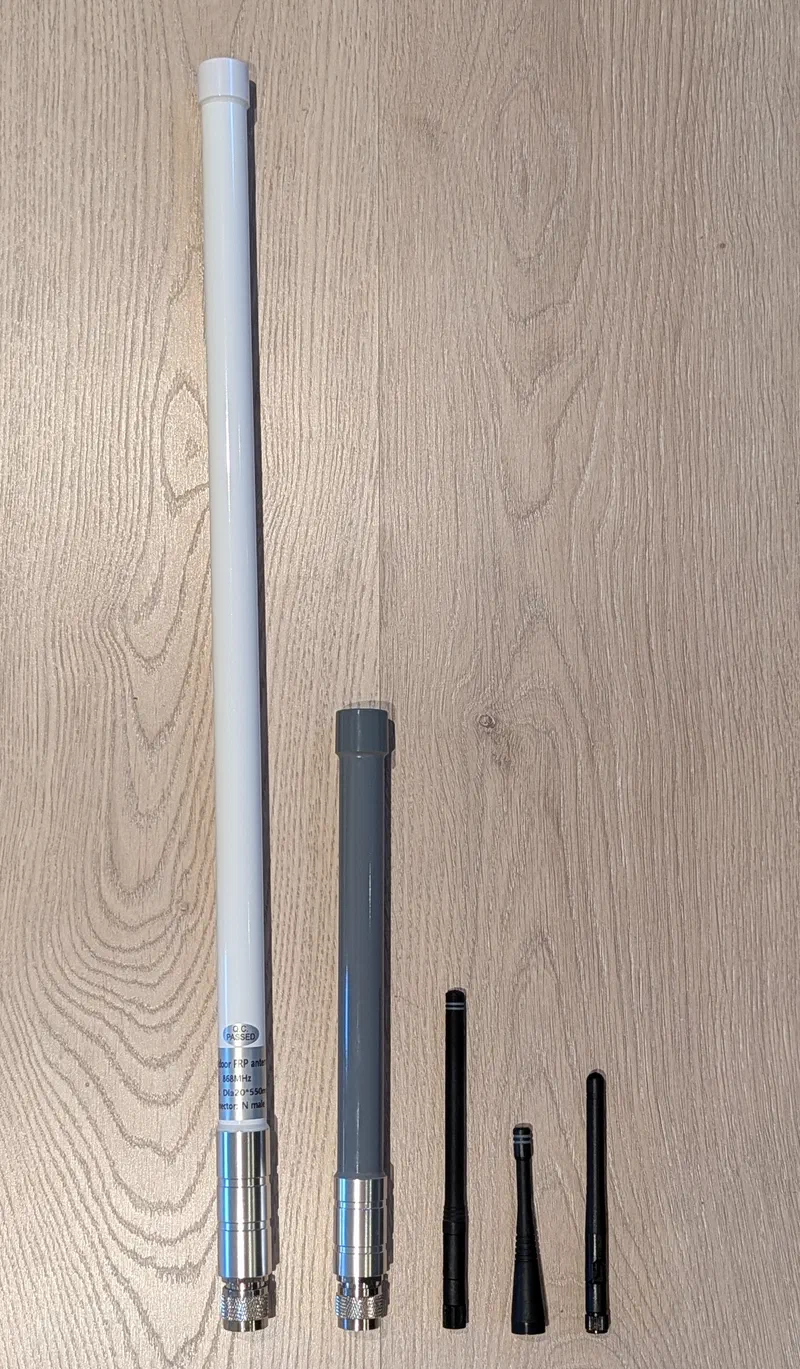
Click here to read about the test method.
Results
Click a column header to sort, or an antenna for details, photo and SWR plot. Both gain columns are relative to the worst performing antenna, which is set to 0.00 dB. Bandwidth is the continuous range around the SWR minimum with SWR ≤ 2; > means the band runs past the end of the sweep. — means not measured.
| Antenna | Gain, wired | Gain, handheld | SWR @ 868 MHz | Bandwidth |
|---|---|---|---|---|
| Aliexpress 55cm fibreglass | 7.37 dB | — | 1.13 | 112 MHz |
| Aliexpress 20cm soft antenna | 6.49 dB | 5.27 dB | 1.41 | 40 MHz |
| Linx ANT-868-CW-QW-SMA | 2.17 dB | 0.96 dB | 3.93 | 71 MHz |
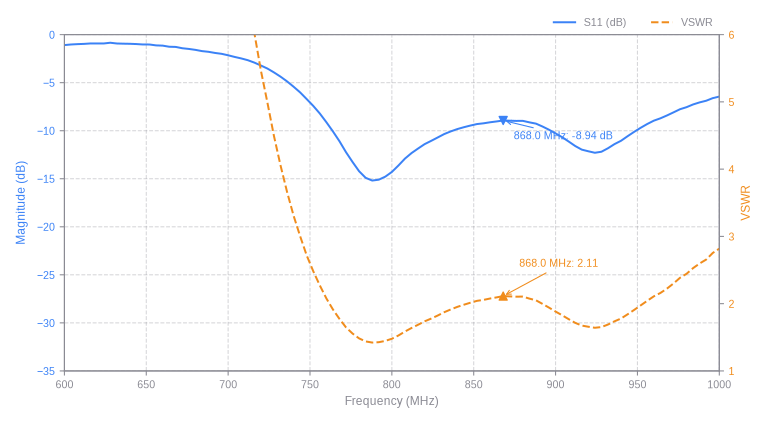
| Aliexpress 24cm fibreglass | 1.96 dB | — | 2.11 | 84 MHz |
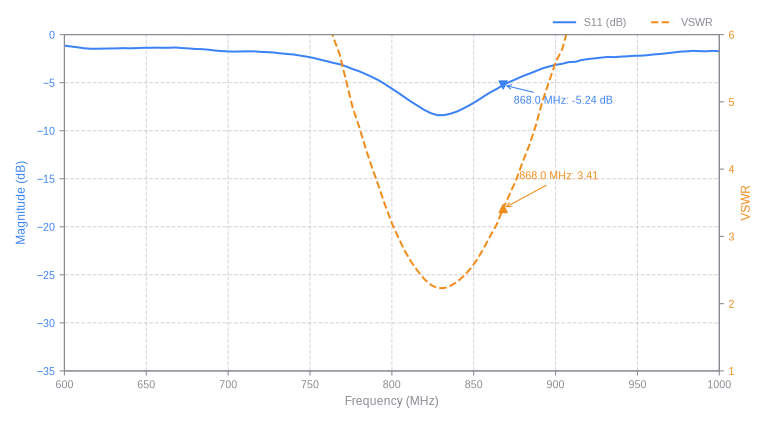
| Stock antenna for Wio Tracker L1 | 0.54 dB | 1.68 dB | 3.41 | — |
| Linx ANT-868-CW-HWR-SMA | 0.00 dB | 0.00 dB | 1.49 | 28 MHz |
Aliexpress 55cm fibreglass
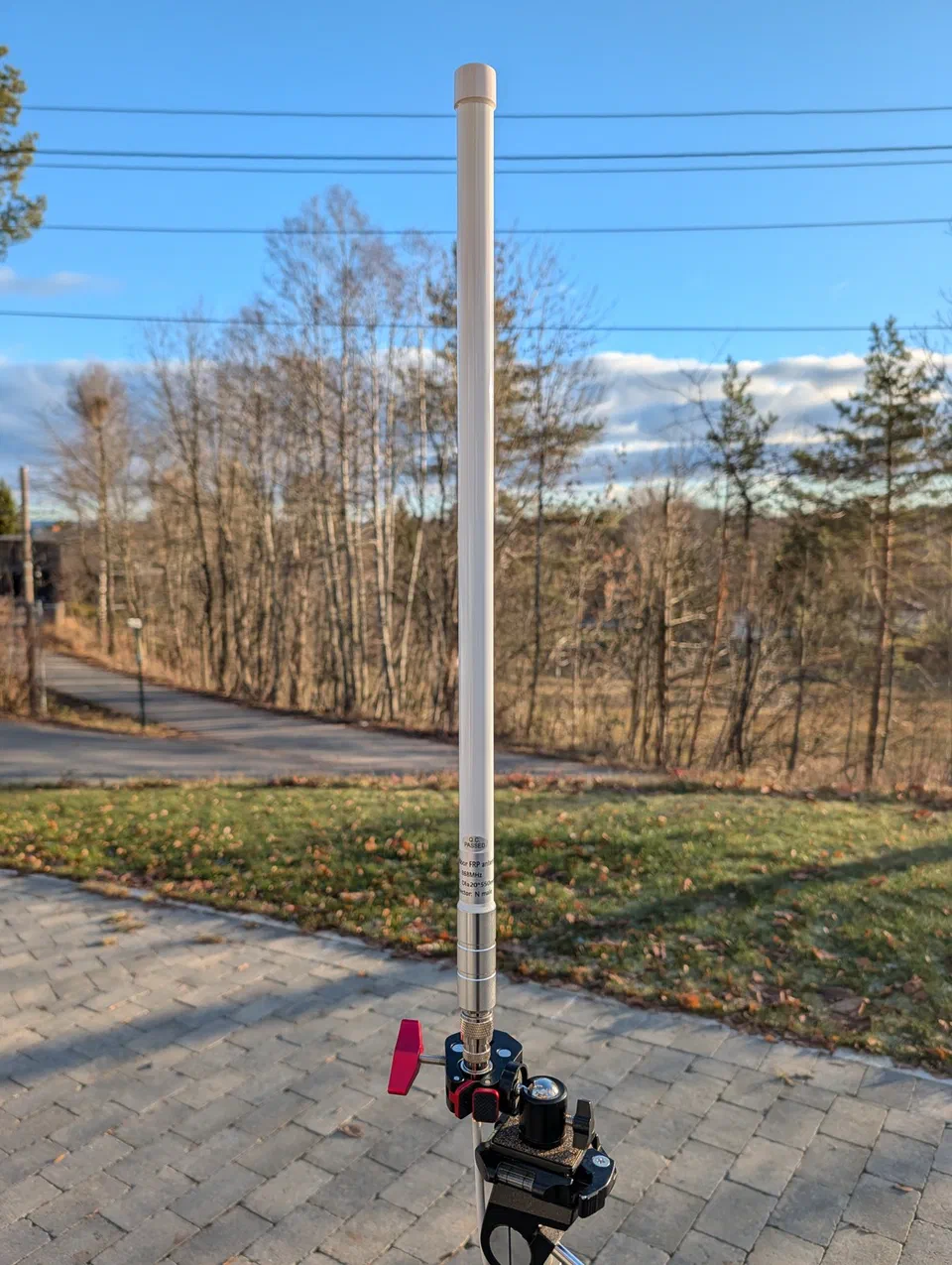
| Gain, wired | 7.37 dB |
|---|---|
| Gain, handheld | — |
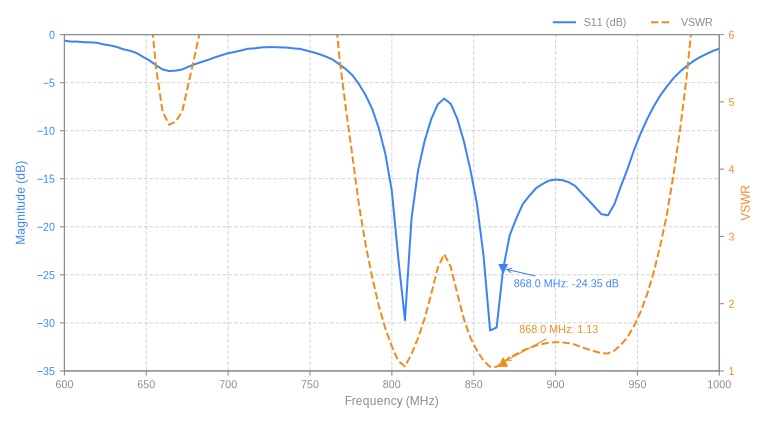
| SWR @ 868 MHz | 1.13 |
| Bandwidth (SWR ≤ 2) | 112 MHz (842–954) |
| Buy | aliexpress.com |
A very good performer. Ground plane independent, high gain, good bandwidth, sturdy build.
Aliexpress 20cm soft antenna
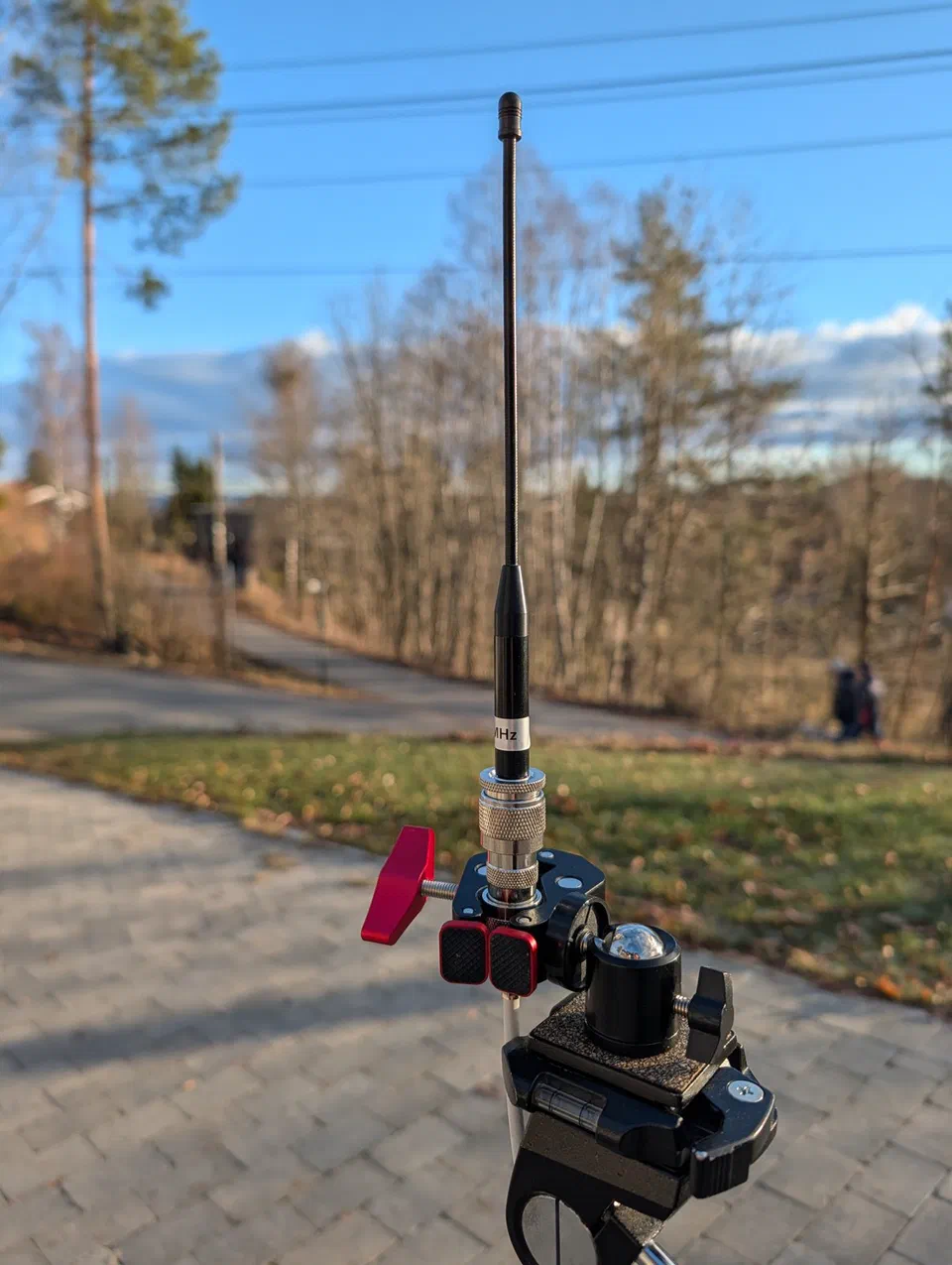
| Gain, wired | 6.49 dB |
|---|---|
| Gain, handheld | 5.27 dB |
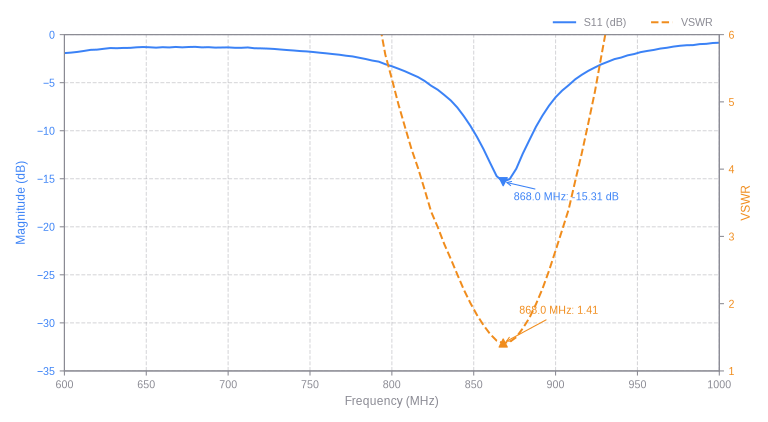
| SWR @ 868 MHz | 1.41 |
| Bandwidth (SWR ≤ 2) | 40 MHz (848–888) |
| Buy | aliexpress.com |
Suprisingly good antenna for portable operation. High gain. Bandwidth not very wide as expected for a relatively small antenna, but more than enough to cover the entire band.
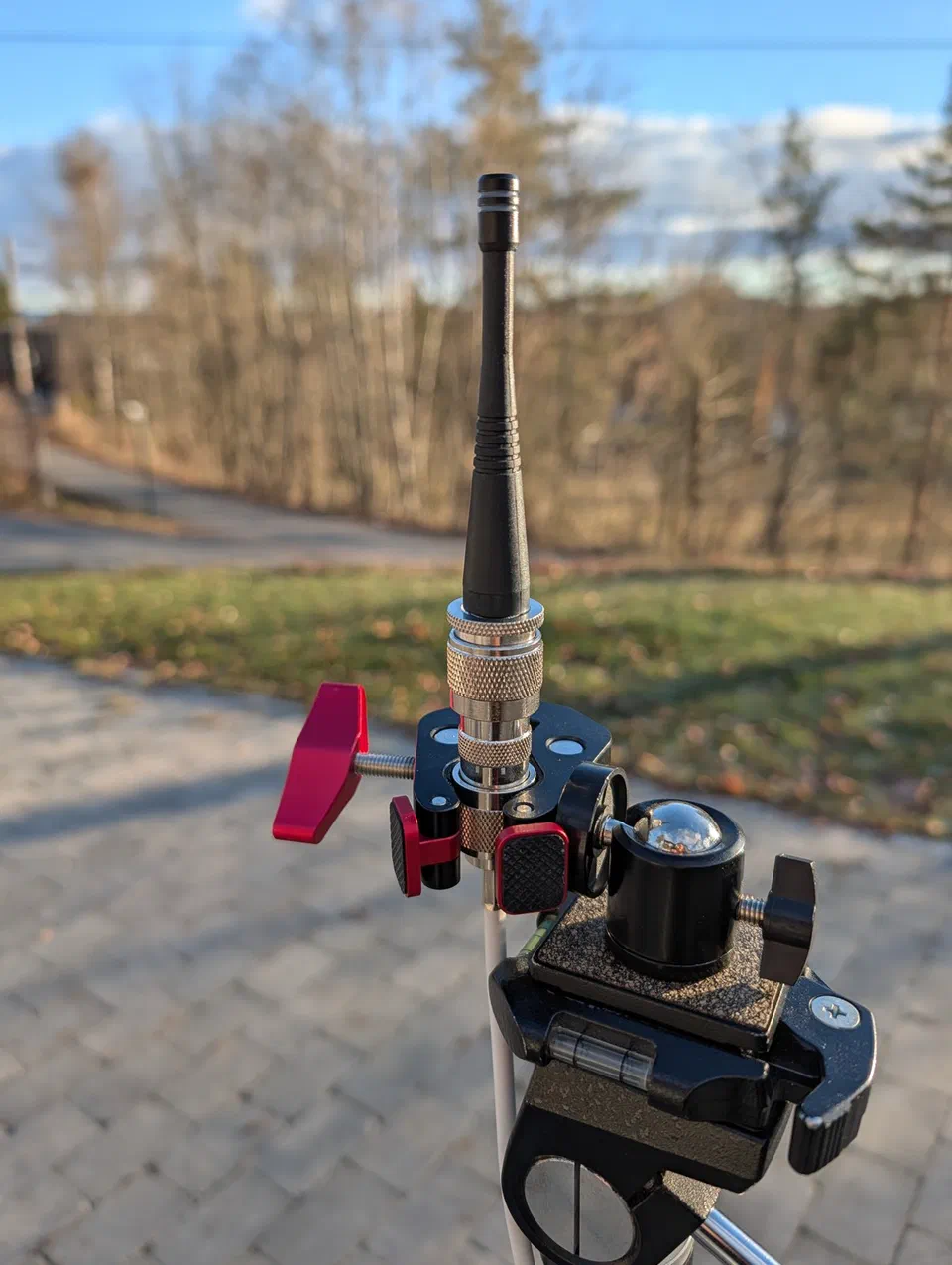
Linx ANT-868-CW-QW-SMA
| Gain, wired | 2.17 dB |
|---|---|
| Gain, handheld | 0.96 dB |
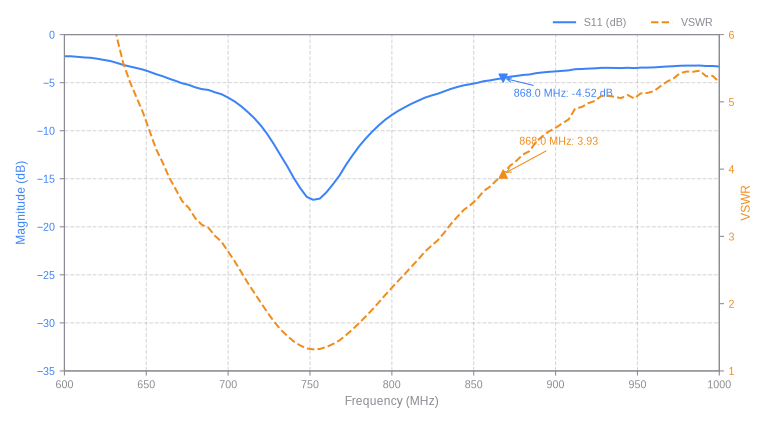
| SWR @ 868 MHz | 3.93 |
| Bandwidth (SWR ≤ 2) | 71 MHz (720–791) |
| Buy | — |
Really depends on a ground plane, so this didn’t turn out too well. But it reflects real world performance in many cases because many use cases are likely to be without a ground plane.
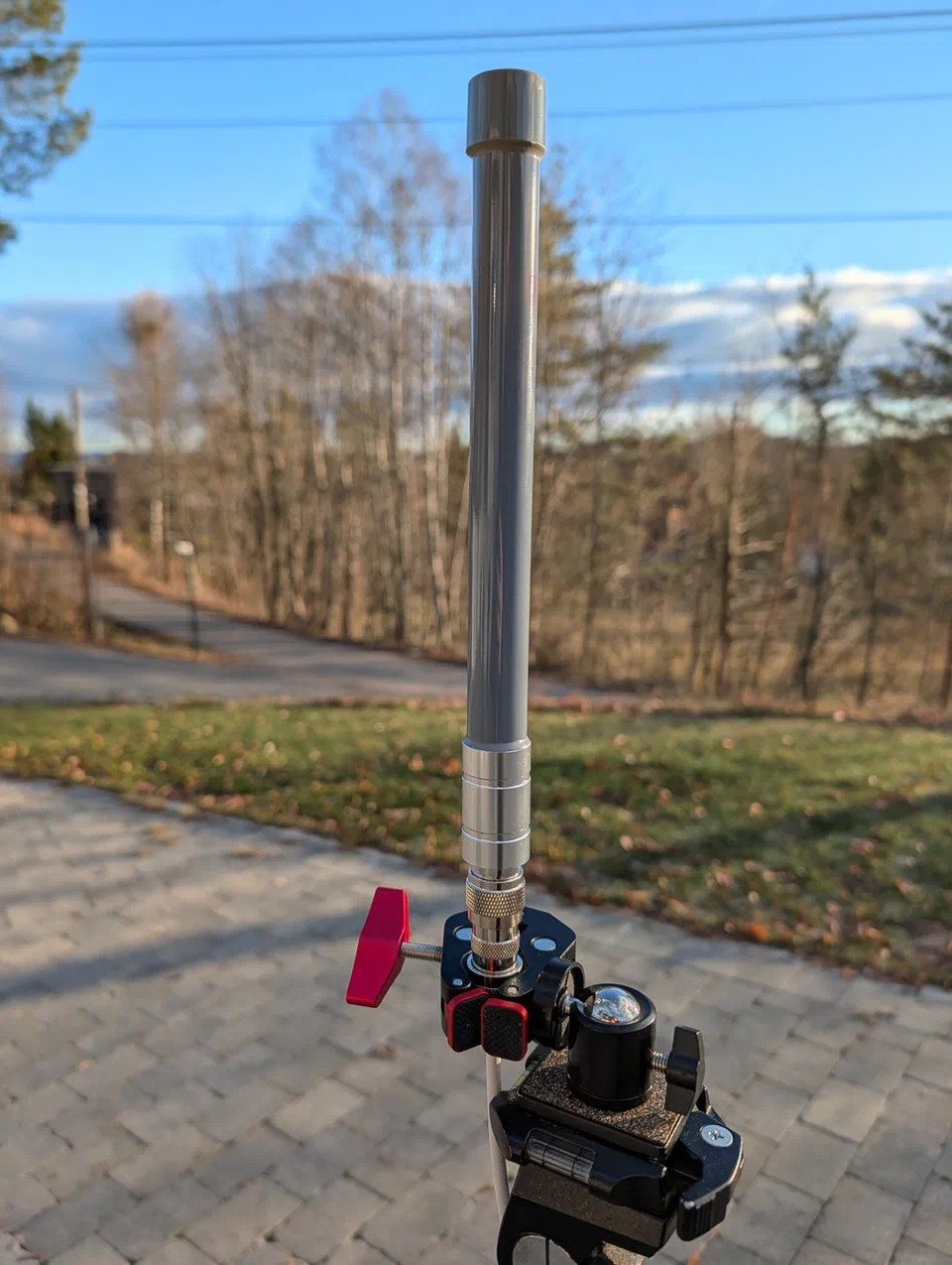
Aliexpress 24cm fibreglass
| Gain, wired | 1.96 dB |
|---|---|
| Gain, handheld | — |
| SWR @ 868 MHz | 2.11 |
| Bandwidth (SWR ≤ 2) | 84 MHz (762–846) |
| Buy | aliexpress.com |
A little disappointing. Not well matched and mediocre gain. Build quality seems good though. The designed frequency range goes above SWR 2:1 in the center, so bandwidth only catches the leftmost part of the frequency range.
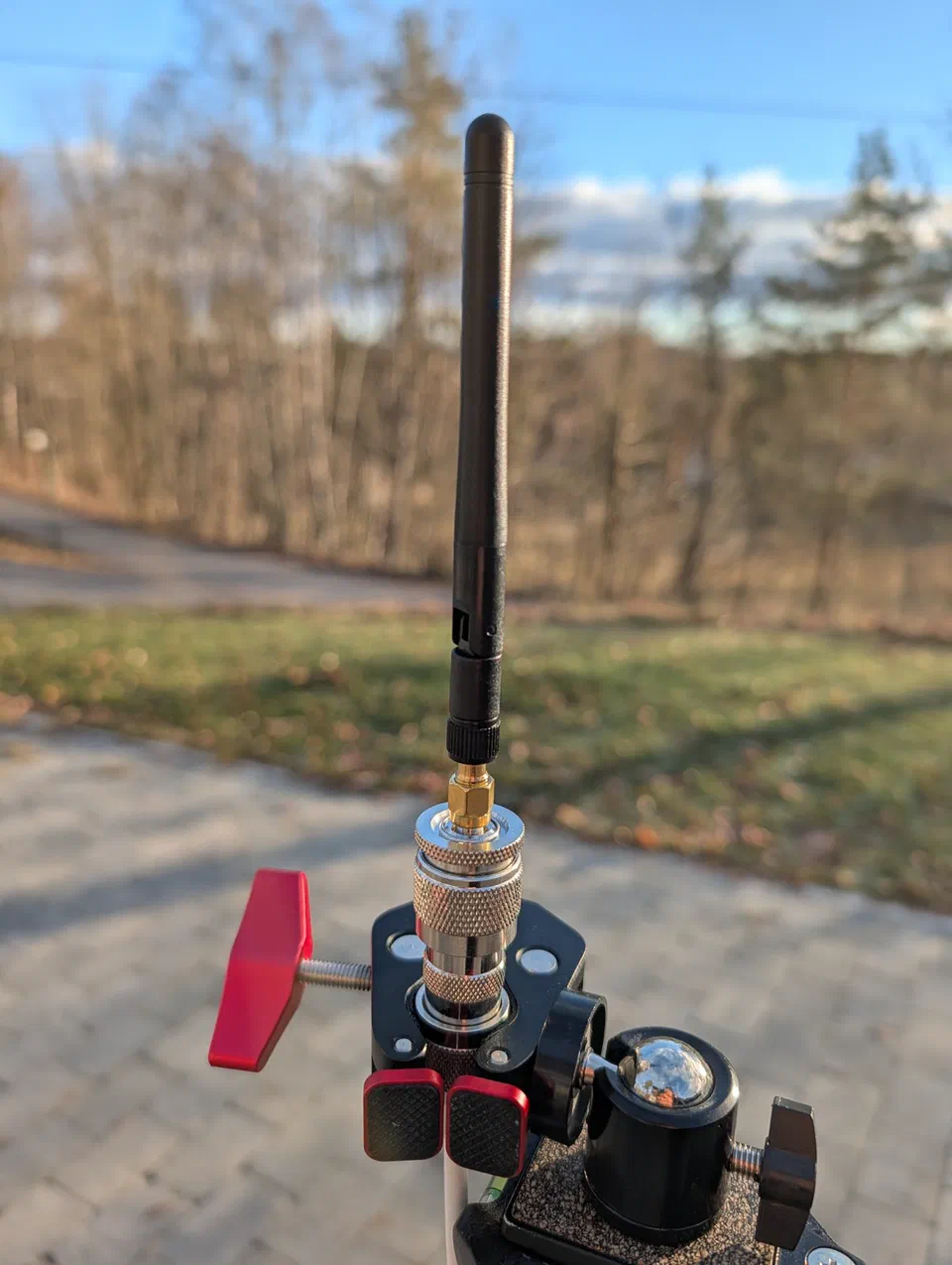
Stock antenna for Wio Tracker L1
| Gain, wired | 0.54 dB |
|---|---|
| Gain, handheld | 1.68 dB |
| SWR @ 868 MHz | 3.41 |
| Bandwidth (SWR ≤ 2) | — |
| Buy | — |
Small and very easily detuned antenna. Did perform OK in the gain test, but it’s jeopardy because small changes to the surroundings detunes it a lot.
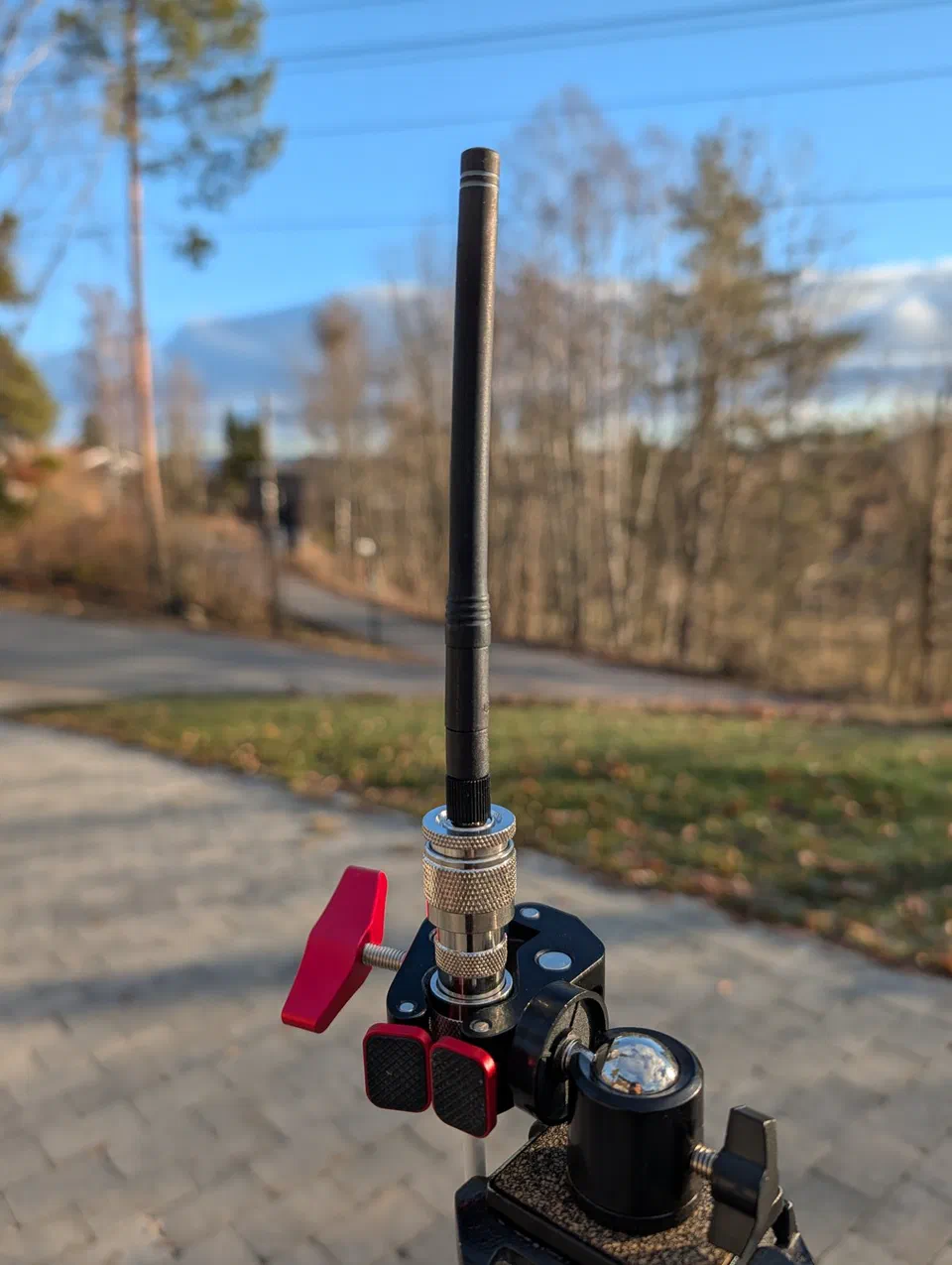
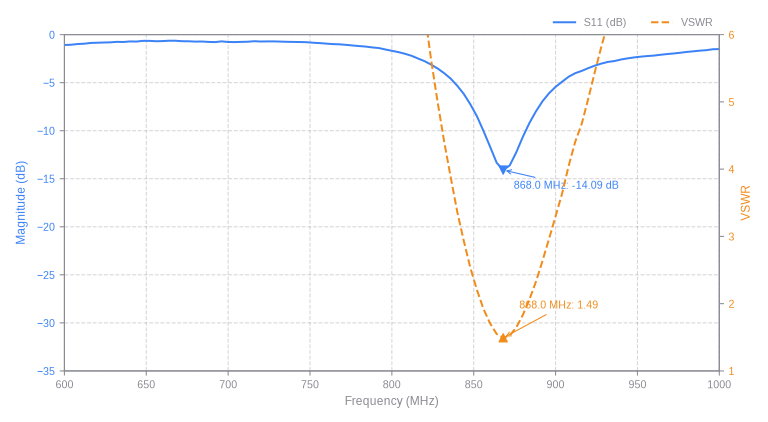
Linx ANT-868-CW-HWR-SMA
| Gain, wired | 0.00 dB |
|---|---|
| Gain, handheld | 0.00 dB |
| SWR @ 868 MHz | 1.49 |
| Bandwidth (SWR ≤ 2) | 28 MHz (855–883) |
| Buy | digikey.com |
Based on return loss / SWR, this seems to be tuned quite right. However it does perform very bad in the gain tests. Unless the efficiency is terrible for some reason, the energy must be radiating in other directions than the horizon.
Test method
Three different types of tests are done:
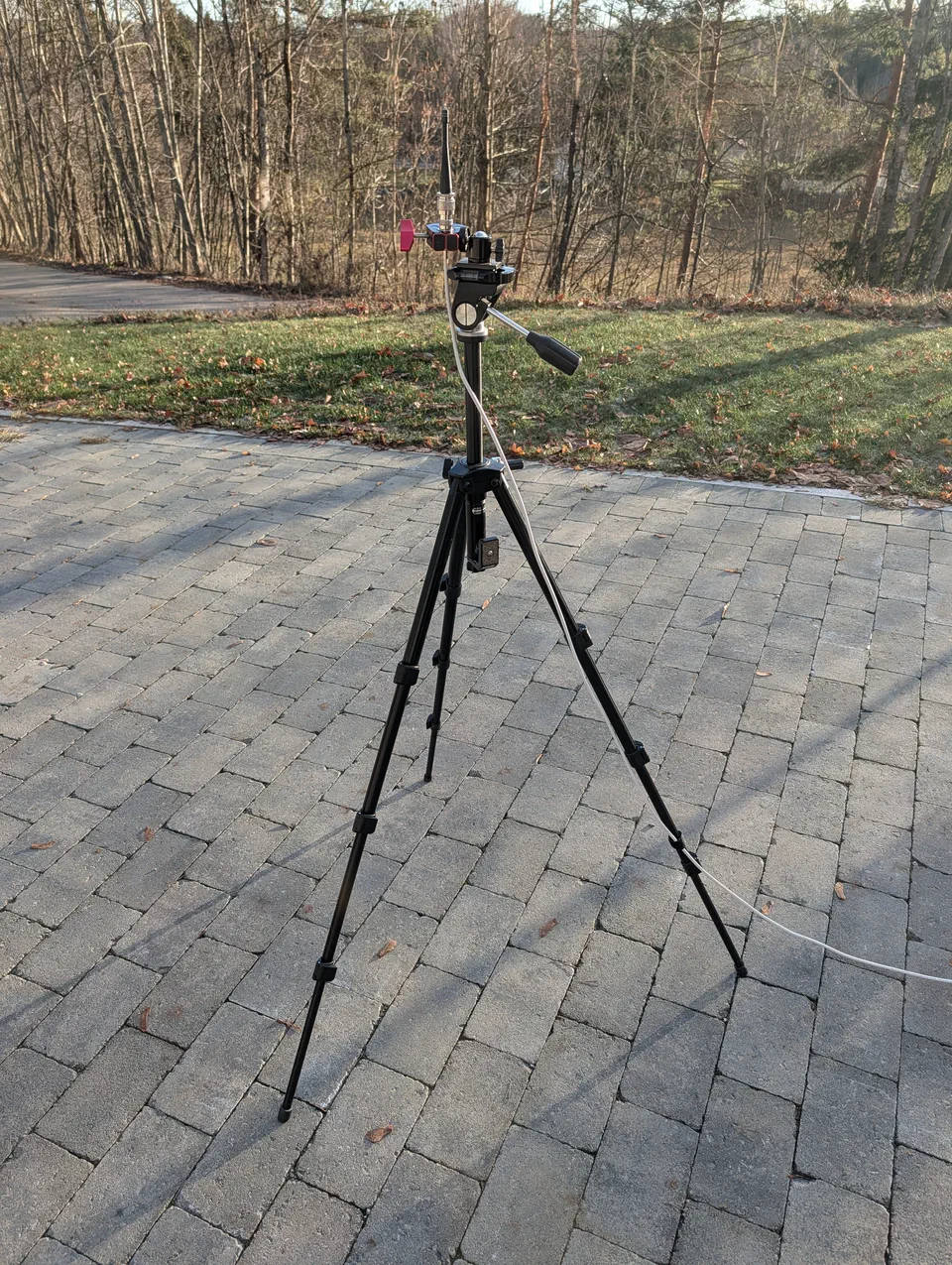
Test 1: Gain as base antenna ("wired")
The purpose of this test is to simulate how an antenna would perform in a base station scenario.
This is a simple way to test gain, with a lot of disclaimers:
First of all, this is not done in an anechoic chamber. In other words reflections will affect measurements. Noise floor however is not very problematic, because the transmitted signal is well above the noise floor/other transmitters.
Secondly, gain is only measured at 0 degree elevation. If the radiation pattern of an antenna is tilted up or down, this will affect the measurement badly. However that's pretty fair, as we are mostly interested in the energy radiated at zero degree elevation.
- Antenna under test (DUT): Placed on a tripod and connected with a long coax cable to the transmitter
- Transmitter: TG source in SSA3021X spectrum analyzer
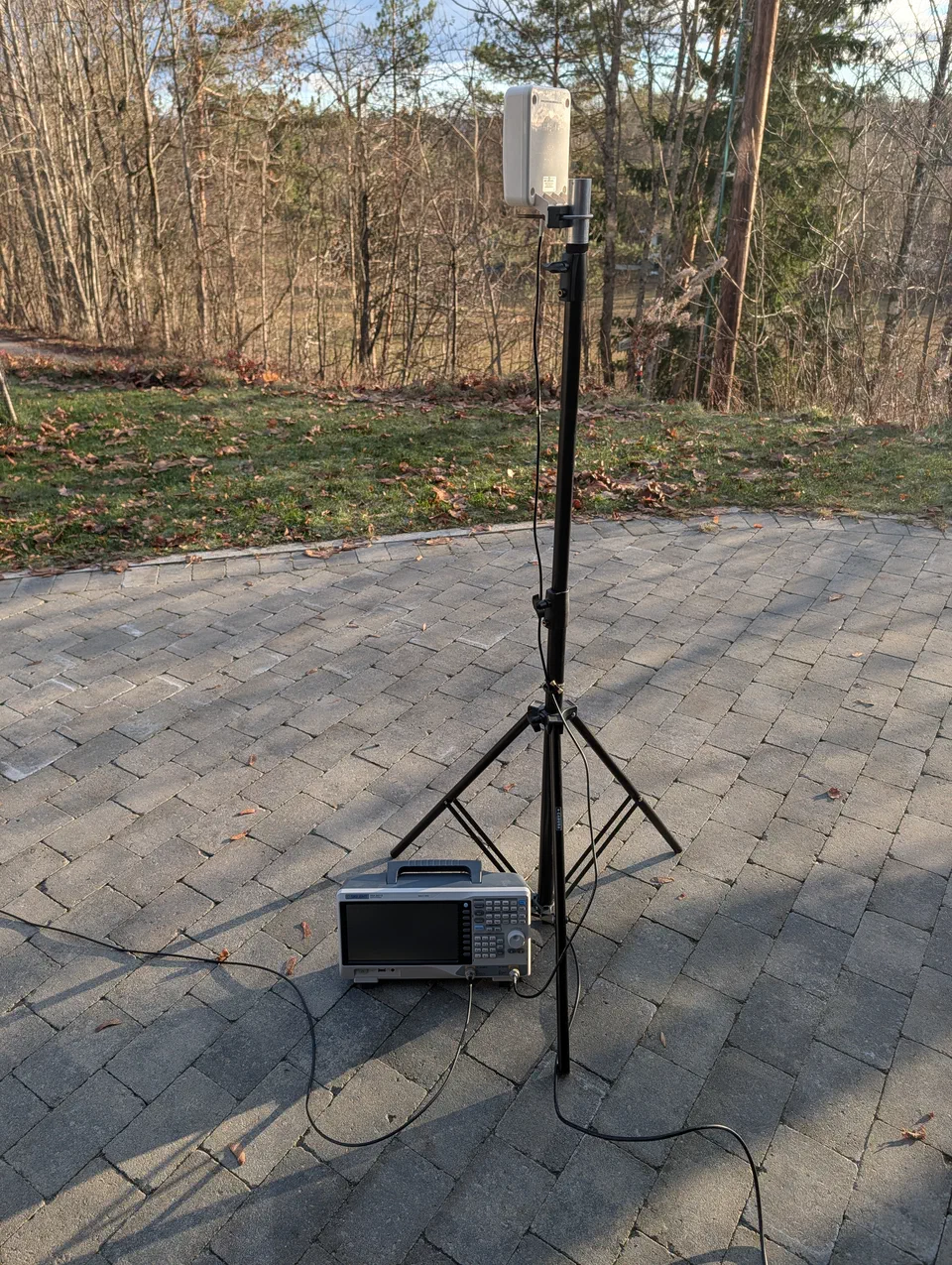
- Receiver: SSA3021X spectrum analyzer
- Receiver antenna: Directional 868 MHz patch antenna, to minimize reflections. (Could have been much more directional to attenuate reflections even more.)
Transmitter:
Receiver:
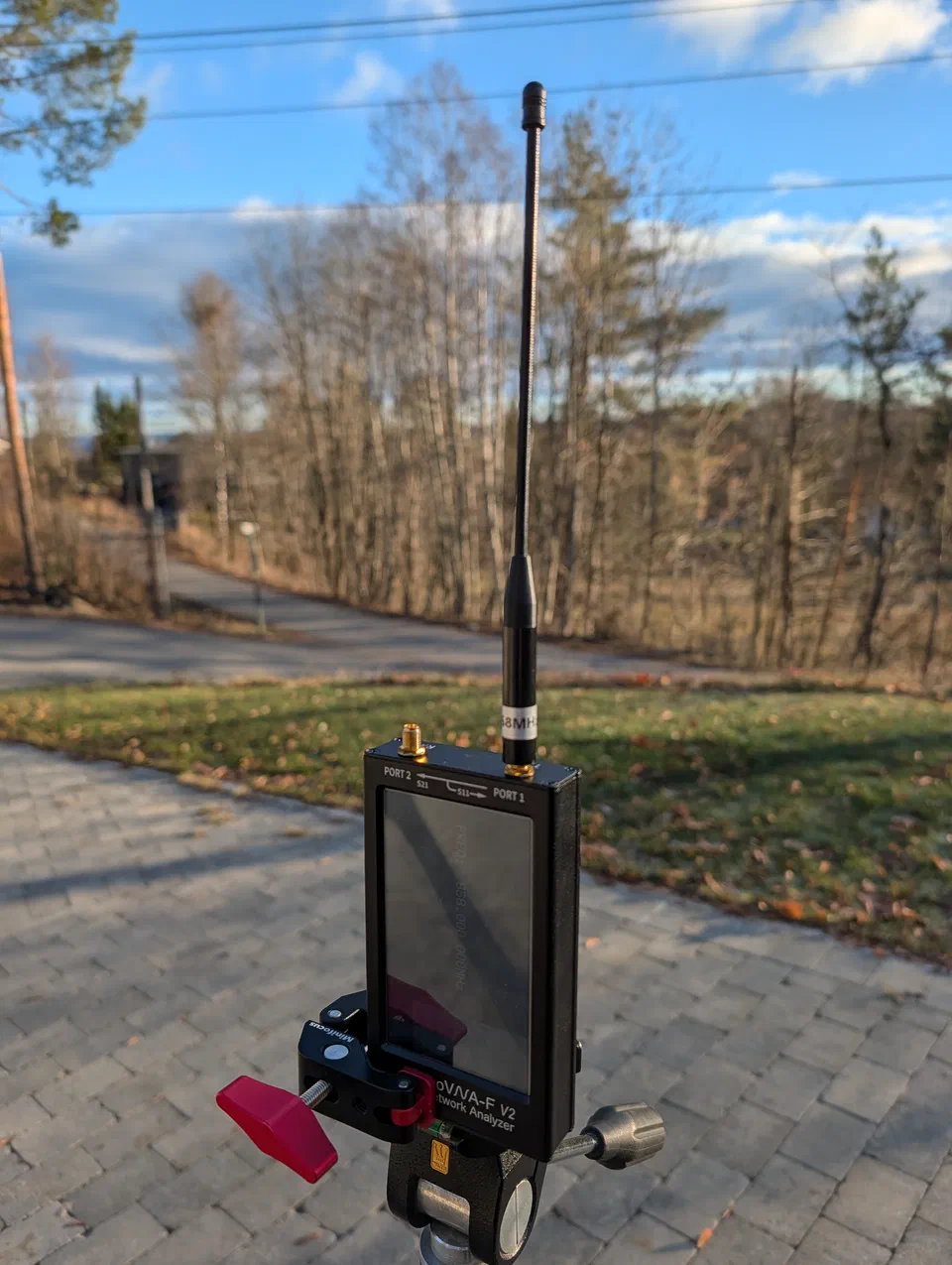
Test 2: Gain when handheld (connected directl to transmitter)
The purpose with this test is to simulate a handheld device with little to no counterpoise / ground plane. The transmitter is of course capacitively coupled to the rest of the tripod because the metal clamp is very close (only some 1 mm rubber pads inbetween), but it's still a large difference from a direct connection.
- Transmitter: Signal generator in NanoVNA-F V2
- Otherwise similar to above
Test 3: S11 / SWR when wired
SWR is measured with a 1 meter cable, so this is similar to the "wired" gain measurement. Short/open/load calibration is obviously done where antenna is attached.
If I get access to an anechoic chamber I will repeat these measurements.
Follow new posts
Get one email when I publish a new post. Unsubscribe any time.
Your address is stored by Buttondown and only used for these emails. You'll get a confirmation email first. Or follow via RSS
Related
Field Day 2025 at Filtvet
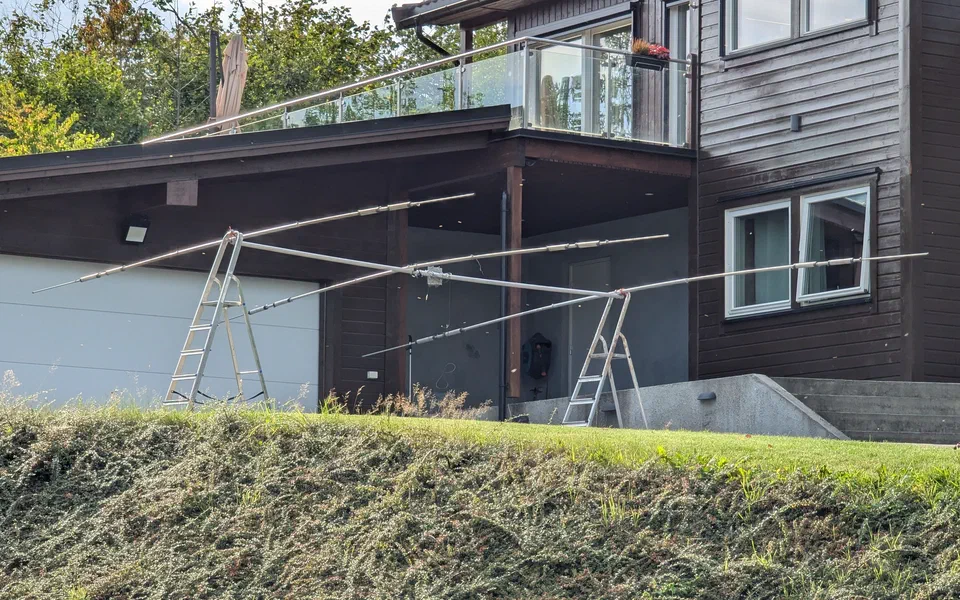
These days we are preparing for NRRL Field Day 2025 at a cabin in Filtvet, Norway. We will be 6 guys with origins from LA1K using the callsign LA8G/P. Field Day is a large ham radio event all about making as many contacts as possible in 24 hours, while not being dependent on existing infrastructure. This means we need to deploy the whole antenna/radio setup in less than 24 hours and provide energy from generators and/or batteries.
Owl VHF - a versatile digital radio transceiver
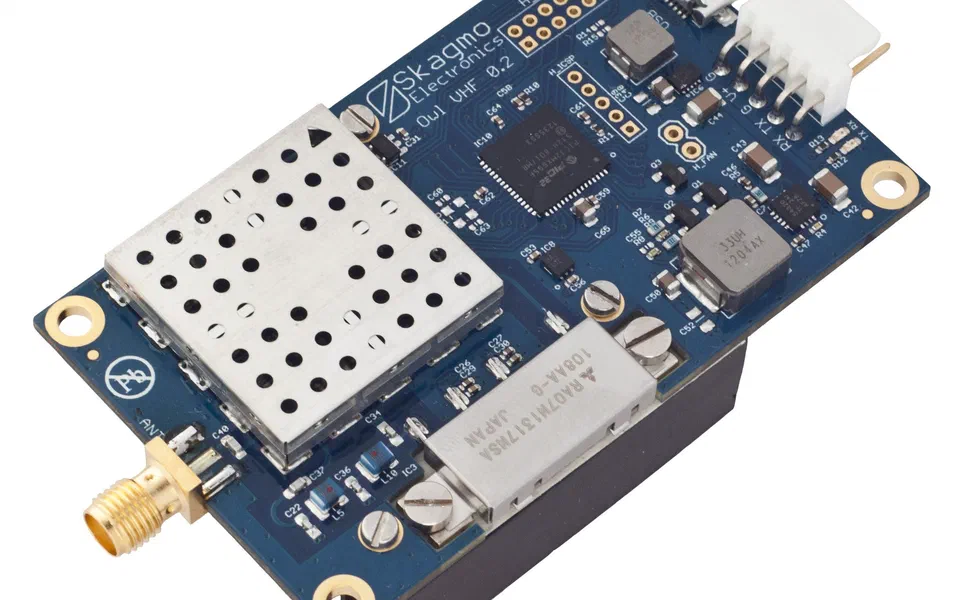
A compact, lightweight, energy efficient and flexible SDR transceiver for the 2-meter amateur radio band and AIS (Automatic Identification System). Designed for extreme mobile applications, such as cube satellites, UAVs, stratospheric balloon payloads etc.
Narrowband SDR transceiver - phase 1
An attempt to make a new compact and flexible transceiver for amateur radio use.
Comments